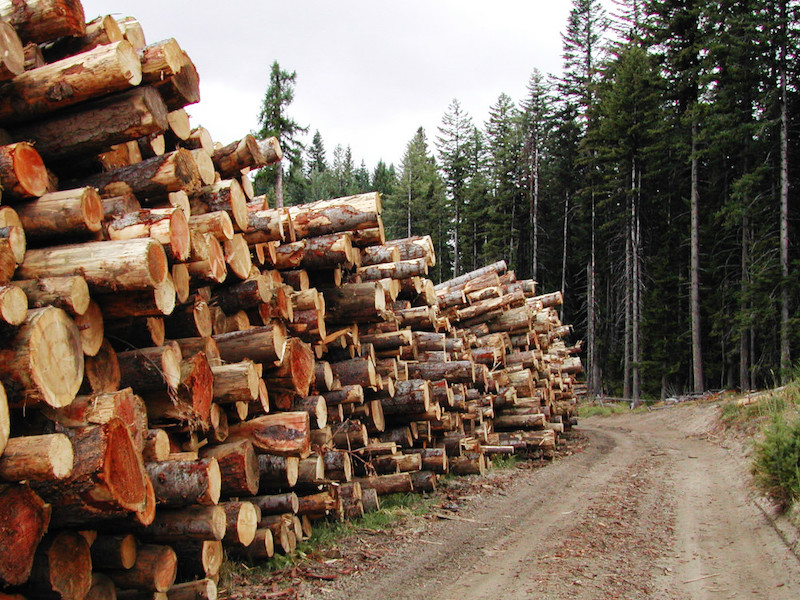
In 2022, Friends of the Clearwater organized a first-of-its-kind analysis of the carbon impacts of the draft Nez Perce-Clearwater Revised Land and Resource Management Plan (AKA the "Forest Plan").
John Talberth, an economist with the Center for Sustainable Economy, completed the following report, which analyzes how current carbon stocks in the Nez Perce-Clearwater National Forests (NPCNF) would change under different management directives.
The findings show that under the NPCNF forest plan, carbon emissions would increase. Under the newly revised version of the forest plan, the emitted carbon from logging, burning, and roadbuilding would be like putting hundreds of thousands of cars on the road. The report emphasizes the importance of accurate carbon accounting in forest management and the consequences of increased logging poses to our atmosphere and climate.
The report reveals the amount of greenhouse gas (GHG) emissions from implementing the revised forest plan, something the US Forest Service has so far refused to do. Such inaction is morally reprehensible during such a critical moment for our shared climate.
Funding for the report was generously provided by the Charlotte Martin Foundation.
CARBON LIFECYCLE ANALYSIS
Talberth's findings rely on knowing how carbon, a chemical building block of trees, actually transforms over the life of trees and forests, both logged and unlogged.
In a wild (unlogged) forest ecosystem, carbon stocks are high and relatively stable. As trees die and decay, they release carbon dioxide, and as saplings grow, they absorb it. Large disturbances like wildfire will reduce carbon stocks, but even large fires release 3-5% of forest carbon, mostly by burning needles, leaves, and the top layer of the forest floor.
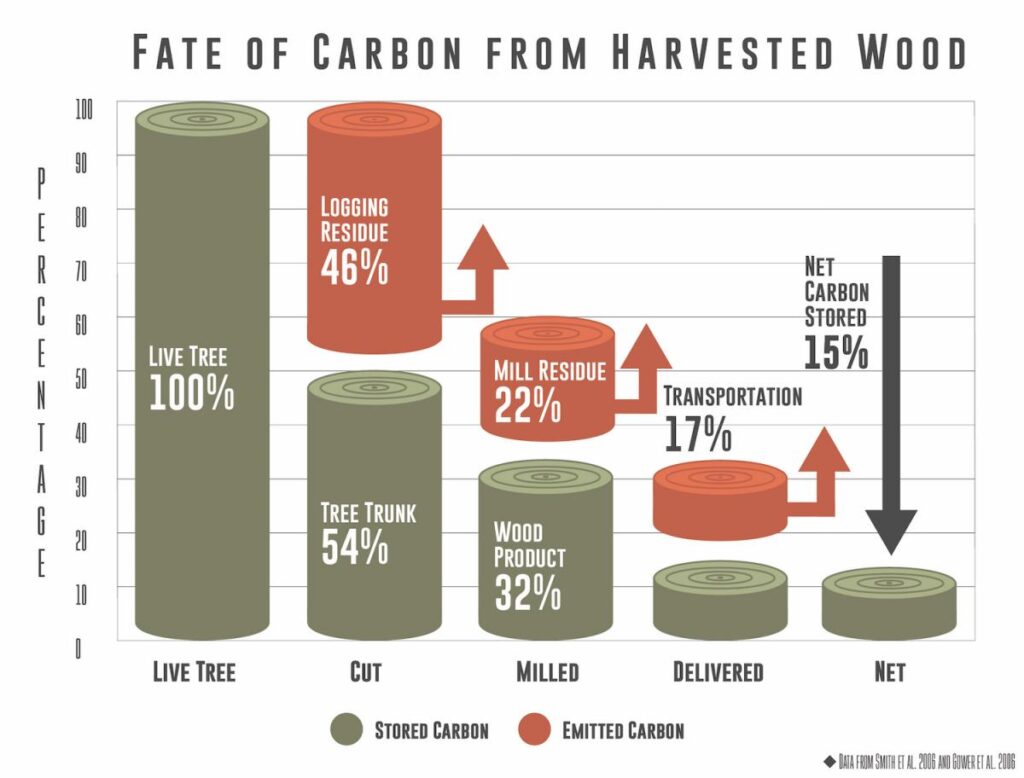
Logging dramatically alters the carbon cycle in forests. Each stage of the logging process reduces forest carbon stocks by emitting carbon dioxide. Short-lived forest products (like paper) are quickly used, discarded, and decompose, emitting most of their carbon. Even long-lived forest products like dimensional lumber only store a fraction of the carbon of the original tree. Over the course of logging—felling, limbing, slash burning, and milling—roughly 85% of the carbon of a tree is lost, on average.
CLIMATE IMPACTS OF THE FOREST PLAN
The impacts of climate change, exacerbated by accelerated timber production, put Idaho's public lands at serious risk. According to the report, increased carbon pollution, and the global heat and climate dysfunction it brings, are already disrupting natural processes, making the land:
"more susceptible to heat waves, droughts, water shortages, wildfires, wind damage, landslides, floods, warming waters, harmful algae blooms, insects, disease, exotic species, and biodiversity loss."
At such a critical moment, utilizing the natural capacity of protected forests as carbon sinks should be the priority of our public land managers, not exacerbating climate dysfunction.
You can read the entire report below, or download the PDF at the bottom of the page.
Talberth_2023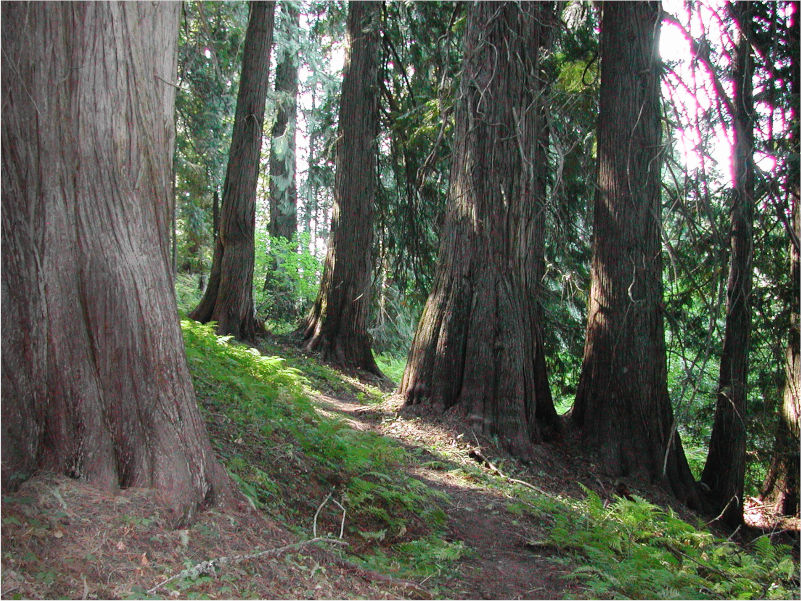
Written by Friends of the Clearwater Forest Policy Director Jeff Juel, this report examines 40 years of U.S. Forest Service policies on management of old-growth forests. The document is a clear-eyed view of the agency's long-term prioritizing of older forests for timber production above all other values.
The report extensively cites dozens of scientific research articles and viewpoints, comparing and contrasting them with numerous Forest Service policy documents and statements. The report promotes the values of old growth the agency has too easily dismissed—its contribution to a stable climate, its diversity lending habitat for rare species, its role in producing clean air and water, and its effects on human aesthetic appreciation and imagination.
The concept of old growth generally refers to areas of forest where many trees approach their upper threshold of age and size, where tree age, canopy structure and composition is complex, where soils are well-developed, and where dead and decaying trees create structural diversity. These habitats have developed very high levels of biological diversity.
Old growth also provides unique ecosystem services. Forests naturally store (sequester) carbon dioxide. Old forests also exert huge impacts on the water cycle, whether by supplying clean spring water, increasing forest humidity, or mediating the impacts of heavy rain and snow on waterways.
Without human management, upwards of 25 to 30% of a forest landscape may be within an accepted definition of "old growth" at any given time. Old growth is better understood as a specific kind of forest landscape that is approaching its zenith of complexity, rather than an individual tree that is old and large. In turn, natural changes in fire regime, climate, vulcanism and other disturbances over the millennia alter the natural processes influencing forest functions and structure.
The presence of large trees has made old forests prime targets for industrial timber production, which has obliterated most old growth from U.S. forests. Contrary to popular belief, old growth on publicly-owned national forests are not, in general, protected from logging.
The report also examines the pseudo-scientific justifications to greenwash industrial logging. These include claims that logging reduces fire risk and severity, reduces insect infestations, and promotes growth of larger trees, among others.
In order to serve timber interests the Forest Service must foster the view that old growth is something needing management, not a value needing protection. Industrial timber production and intrusive management is not compatible with the conservation of old growth forests, and until federal agencies make policies to reflect that, the future for this already rare habitat is dire.
Read the embedded report below, or download the PDF at the bottom of this page.
Juel_2021-Old-Growth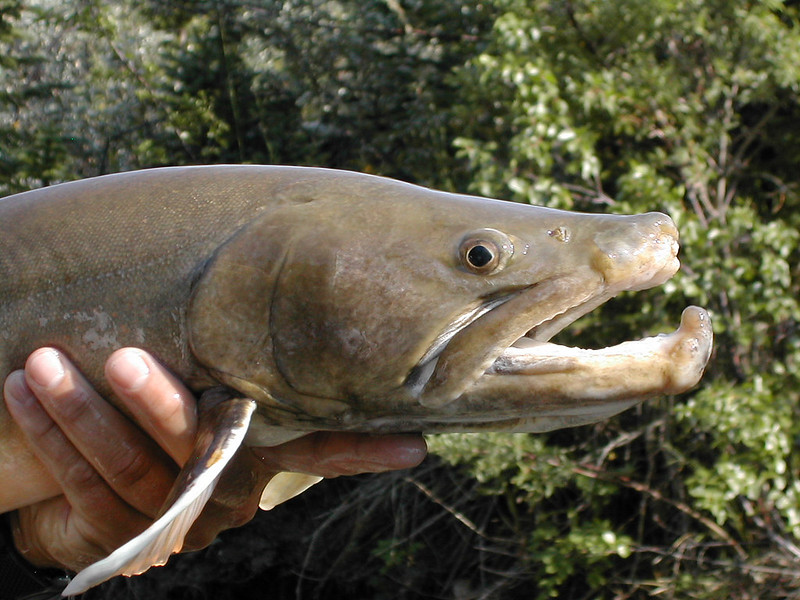
Bull trout (Salvelinus confluentus) are a rare kind of fish native to the cold mountain streams of the Pacific Northwest.
Conservation Status: Threatened
Bull trout were listed as a Threatened species under the Endangered Species Act (ESA) in 1999. In 2015 the U.S. Fish and Wildlife Service prepared a Recovery Plan and in 2020 designated Critical Habitat—steps required by the ESA. Bull Trout require the highest quality mountain streams to thrive. Their habitat requirements are known as the 4 C’s: cold, complex, clean, and connected.
Because of their habitat needs, they are seen as an indicator species of healthy mountain waterways. When their native waterways are degraded, whether from sediment pollution, channelization, damming, rising water temperatures, or other changes, bull trout suffer. In this way, losing bull trout can show declining stream quality in the mountain west, like a "canary in the creek".
Physical Characteristics: Bull trout can grow up to 41 inches long and 32 pounds; their average size is usually much smaller, with variation across their range. Fins have white leading edges, with head and mouth larger than most salmonids, hence its name. Coloring is pale yellow to crimson spots on a darker background; spawning adults develop varying amounts of red on belly. Unlike other members of the salmonid family, bull trout and other closely related species generally lack teeth on the roof of their mouths.
Diet: Juveniles feed on plankton and other aquatic invertebrates. As they mature, they eat other fish, including eggs and fry, and species like whitefish and other trout.
Habitat: Require very specific habitat components to spawn and survive. Water must generally be below 55 degrees Fahrenheit, have clean gravel beds, deep pools, complex cover such as snags, and expansive systems of interconnected waterways to facilitate spawning migrations. Favor deep pools of cold lakes/large rivers, as well as high mountain headwaters. Presence of bull trout is an excellent indicator of water quality.
Range: Found in cold, clear waters of high mountains and coastal rivers of northwestern North America. Clearwater Basin provides many crucial and ideal waters, including headwaters of primary river drainages. Virtually all of Clearwater River System and tributaries offer good habitat, including adjacent St. Joe and Salmon River Systems. Strongholds are Upper North Fork Clearwater and Upper St. Joe Rivers in the North Fork and Mallard-Larkins Roadless Areas, respectively.
Reproduction: After fourth year are ready to spawn in fall. Will return to birth river only if water temperatures are ideal – mid 40′s – with clean water/silt-free bottom. Any changes in habitat will prevent spawning. Unlike salmon, they do not die after spawning and spawn multiple times during lifetime. Eggs require 4 – 5 months to incubate; hatch in late winter or early spring. Fry remain in natal streambed up to three weeks before emerging.
Threats: Impediments to recovery include habitat degradation/fragmentation, blockage of migratory corridors, poor water quality, climate change and past fisheries management practices, including introduction of non-native species such as brown, lake, and brook trout. Mating with the latter species produces sterile offspring. Streambed erosion and siltation from logging roads are major habitat threat in Clearwater Basin; other habitat alterations from mining and off-road vehicle use may be significant in certain areas.
Miscellaneous: May be either migratory or resident. Residents spend entire lives in same stream or creek and are generally smaller, growing up to 10 inches long. Migratory fish move to large waters to over-winter and then migrate back to smaller waters to reproduce. Migratory fish grow larger, up to 35 inches long and 32 pounds.
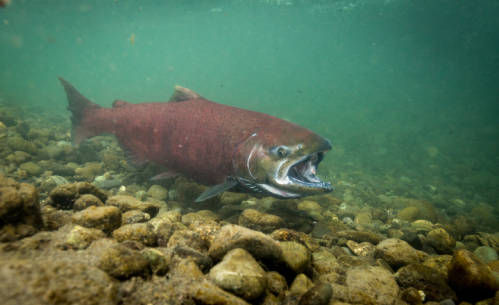
Chinook or king salmon are a threatened fish that live throughout the northern Pacific, from Japan to California. They are a keystone species in the Columbia Basin, where they bring ocean nutrients far inland as they migrate to spawn.
Conservation status: Threatened
Chinook salmon (Oncorhynchus tshawytscha), also called King salmon, are fish that spend most of their lives in the Pacific Ocean, only swimming upstream to breed, die, and begin the cycle of life anew. They are a keystone species of the Pacific Northwest that is preyed upon by animals as diverse as orca, salmon sharks, grizzly bears, cormorants, and osprey. Even in death, their nutrients benefit the region by increasing available nitrogen in soils, promoting tree growth.
The relationship between humans and Chinook salmon goes back a very long time. In Nimiipuu legend, it was the Chinook salmon who first offered itself as food to human beings, asking that in return human beings look after salmon.
Decline in Chinook and loss of cultural tradition in the Nez Perce Tribe go hand in hand. According to independent fish biologists, the Lower Snake River dams must be breached in order to save Chinook salmon in the Clearwater Basin.
Physical Characteristics: Largest species of Pacific salmon family, averages 33 – 36 inches long and 10 – 50 pounds; possible to grow to 5 feet long and over 100 pounds. Blue-green, red, or purple on back and top of head with silvery sides and white belly. Black spots occur on tail and upper half of body; mouth is often dark purple. During mating season they develop a reddish tint around dorsal fins and tail. Males have distinctively hooked mouth.
Diet: Juveniles feed on aquatic invertebrates, including crustaceans and amphipods. Adults ingest smaller fish.
Habitat: Needs fast-moving, freshwater streams and rivers. Oxygenation stimulates algae growth and other aquatic life which ultimately feed salmon. Needs clean, cool, sediment-free water to keep water temperatures low. Also needs intact riparian zone to protect smolts and juveniles. Adult salmon live 1-8 years in the ocean and adapt to varied environment.
Range: Found in cold, upper reaches of Pacific Ocean, from west coast of United States/western Canada and Alaska to Russian and Japanese waters. Clearwater Basin provides excellent spawning grounds in summer – often referred as summer Chinook. Fall Chinook run also occurs in lower Clearwater.
Reproduction: Maturity is reached at 3 – 7 years; at that point they journey upstream to natal waters – sometimes several hundred miles. Male/female may spawn at original birthing grounds. Female digs nesting hole (redd), and deposits thousands of eggs before male releases sperm. Male/female guard eggs during incubation, then adults die. First year or so (juveniles) stay in freshwater environment, moving gradually to estuaries, then open ocean.
Threats: Chinook salmon are listed as endangered, with abundant threats including overfishing, diversion and overuse of water resources, dams that alter the speed of water flow and block essential spawning routes, and habitat loss due to development. However, the spring/summer runs in the Clearwater are not listed because there is uncertainty as to whether these salmon are from natural migrants or from planted fish that came from Salmon River stocks.
Miscellaneous: Other commonly used names for this species are King salmon, Quinnat salmon, Spring salmon, and Tyee salmon. Native American tribes of the Pacific Northwest have teamed with state, federal, and academic groups to protect the species, improve habitat and facilitate natural processes. Chinook salmon were enthusiastically described and eaten in the journals of Lewis and Clark. The expedition first encountered the fish as a gift from Chief Cameahwait, brother of Sacajawea. At the first taste, the explorers were convinced they had crossed the Continental Divide.

The Canada lynx (Lynx canadensis) is a rare wildcat native to the boreal forests and mountains of North America. Lynx rely on ample populations of snowshoe hare, their main prey, to survive.
Conservation status: Threatened
The Canada lynx (Lynx canadensis) is a medium-sized wildcat with large feet, notable for its dependence on the snowshoe hare, its main prey. It is a secretive and wide-ranging species, relying on vast, interconnected wildlands to survive.
Although they are roughly the same size as their nearest relative, the bobcat, lynxes have larger feet, thicker fur, and a duller appearance. These adaptations allow lynxes to travel across the deep snowpack of the high Rockies, silently stalking snowshoe hares, red squirrels, ruffed grouse, and other prey.
Canada Lynx were listed as a Threatened species under the Endangered Species Act (ESA) in 2000. In 2006 the U.S. Fish and Wildlife Service first designated Critical Habitat, then revised it in 2009 and 2014. The Service finalized the Recovery Plan in late 2024.
Physical Characteristics: 18 – 23 inches tall at shoulder, 31 – 40 inches long including tail, 15 – 40 pounds. Medium-sized, short-tailed, long-legged cat has huge feet and protruding ears tipped with 2 – inch black hairs. Fur is long, ranging in color from reddish, yellow-brown, to silvery-gray with dark spots or streaks and whitish underside. Large, furry feet allow to stalk prey in silence and travel fast in snow.
Diet: Specialist predator. Snowshoe hare typically makes up bulk of diet – in the populations further north, when hare populations crash so do lynx populations. Secondary prey includes squirrels, other rodents, and grouse. Primarily solitary hunter of remote forests, largely nocturnal with more diurnal activity in winter, and will cache uneaten kill under snow or leafy debris.
Habitat: Depends on dense conifer forests for security and denning. Numerous fallen trees, rocky outcrops, and occasional dense thickets serve as effective cover; these ambush sites are desired habitat components. Forest edges, which provide food for lynxes’ major prey – snowshoe hare – are critical.
Range: Primarily inhabit boreal forests and occur across much of Canada and Alaska, and into northern US border states including Minnesota, Maine, Washington, Idaho, and Montana and extending southward in the Rocky Mountains though portions of Utah, Wyoming, and Colorado. Individual home ranges vary and documented between 3 – 300 square miles. In Lower 48, populations and densities tend to remain low. Historically found throughout Clearwater Basin. Confirmed sighting by Forest Service wildlife biologist occurred along Lochsa River in early 2000s.
Reproduction: Breeding season lasts one month, ranging from March – May depending on local climate. Females attract males by leaving urine where males mark their territory, and by repeated calling. Female will only mate with one male each season, though a male may mate with multiple females. Females produce one to five kittens in May – June; kittens stay with mother through first winter and share den site until mature enough to leave.
Threats: Trapping reduced numbers historically, accidental catch while trapping legal furbearers likely continues; current threats also include habitat destruction/fragmentation from human development, logging, road building, motor vehicle traffic, and snowmobiles.
Miscellaneous: Desired for their fur, population records kept by Canadian government and Hudson’s Bay Company date back to 1730s. Predator-prey relationship between lynx and snowshoe hare well documented for decades; each respective population parallels the other – when hare numbers decline, the change in lynx diet causes productivity of adult females and survival of young to nearly cease.
Other animals benefit from lynx superior stalking skills; the Great Horned Owl will station itself above the lynx and wait for it to flush prey out of hiding place, and then swoop down and capture its meal before the lynx can get it.
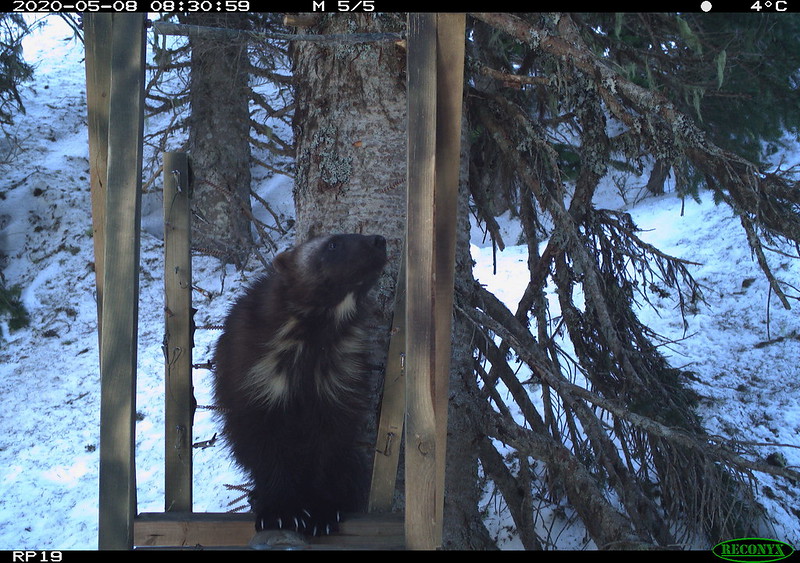
The wolverine is the largest terrestrial member of the weasel family in North America. They are very rare but wide-ranging carnivores, traveling across mountains and forests in search of food.
Conservation status: Threatened
Few have ever set eyes on a wolverine (Gulo gulo) in the wild. A secretive wanderer of mountain ridges and forests, wolverines are perhaps the greatest symbol of the wilderness of the Rocky Mountains. Although they weigh less than most household dogs, this carnivore has a reputation for ferocity—researchers have recorded them hunting moose.
Wolverines are extremely rare. Some biologists believe there are only 300 in the contiguous US in total. This is, in part, because of their unique role in the ecosystem. Wolverines have big, flat feet to walk on top of deep snowpack, thick fur coats, and keen noses. Their reliance on snowpack for hunting and denning makes them extremely sensitive to climate change.
In late 2023, after decades of pressure from activists, the US Fish and Wildlife Service listed the population of wolverines in the contiguous US as threatened under the Endangered Species Act.
Physical Characteristics: 12 – 18 inches tall at shoulder, 24 – 48 inches long, and 15 – 35 lbs. Large, muscular, agile weasel with small head, bushy tail, short legs, and large paws with cinnamon-brown – nearly black fur. Pale tan stripe runs down each side from shoulder to tail. Possesses one of most powerful jaws of any mammal on planet. Has a reputation for ferocity that far out matches its size.
Diet: Incredibly powerful for size; have ability to take down deer, caribou, mountain goats, and occasionally moose, particularly if weakened in harsh winter or deep snow. Generally prey on mice, ground squirrels, birds, beavers, and other rodents. Adept scavengers particularly during winter months.
Habitat: Large territory encompassing great variety of habitats. During winter inhabit lower elevations/valleys in pursuit of prey. In summer occupy ridges/mountains (pursuit of prey), including sub-alpine/alpine landscapes. Regardless of season, require large/remote protected areas in order to survive, with little/no human disturbance.
Range: Very small populations in Canadian/Northern Rockies; roams coniferous forests of Montana, Wyoming and Idaho. Even smaller populations in Northern Cascades of Washington/Oregon, and Central Rockies of Colorado. Sightings in Wallowa Mountains of northeastern Oregon. Best available science indicates less than 300 in Lower 48; Clearwater Basin one of last great strongholds.
Reproduction: Breeds from April – September but embryos do not implant until early winter if mother has adequate fat stores. Litter of 1 – 5 kits born between late-February and mid-April. Born blind and deaf; kits nurse for 8 – 9 weeks before leaving den with mother to acquire hunting skills. Kits typically spends first winter with mother, before sexually maturing and dispersing following spring.
Threats: Trapping, road building, logging, and recreation (motorized and non-motorized) have negatively impacted past two centuries. Climate change is serious concern; species depends on snow pack for habitat, denning, scavenging, and raising young.
Miscellaneous: Known as “skunk bear” because produces smell that rivals skunk. Abundant stinky scent produced in anal glands and used to mark territory. Wolverines and skunks are part of Mustelidae family. Wolverines also referred as “Symbol of Wilderness”.
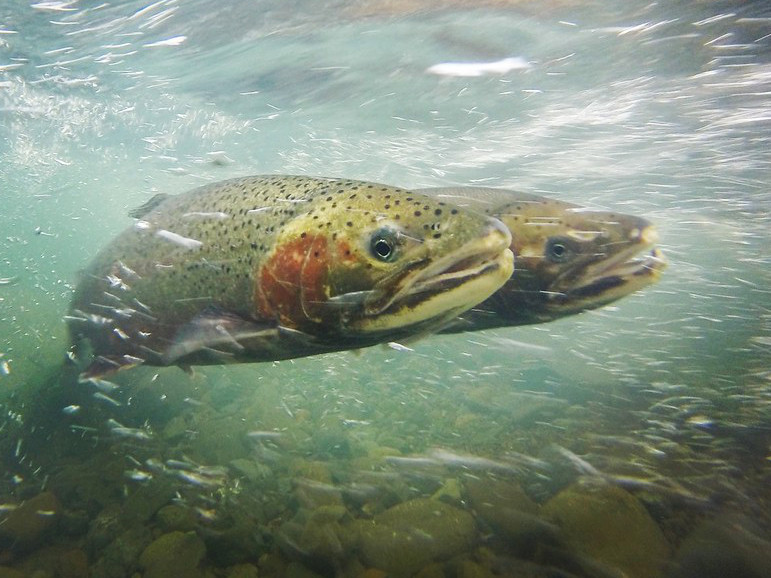
A migratory cold-water fish native to the West Coast of North America. Steelhead are a key part of Nimiipuu (Nez Perce) culture, as well as a popular sport fish.
Conservation status: Threatened
Steelhead trout, also called steelhead salmon, are genetically identical to rainbow trout. However, their lifecycle is anadromous, meaning they spend much of their lives in the ocean, traveling over 400 miles inland to breed in the cold headwaters of the Clearwater (rainbow trout, on the other hand, live their whole life in freshwater). Unlike salmon, most steelhead don't die after spawning, and can return to the ocean again.
Their numbers have declined dramatically since dams were built on the lower Snake River. Over 80,000 steelhead were counted at the Ice Harbor dam in the 1960s, dropping to about 15,000 by 1980 (an 80% decline).
Billions of dollars and decades of work have gone towards salmon and steelhead recovery in the region, with little effect. Breaching the lower Snake River dams (LSRDs) is necessary for recovering wild steelhead populations.
Eleven distinct populations of steelhead are protected under the Endangered Species Act. The Snake River Basin steelhead population, including the Clearwater River and many tributaries, was listed as Threatened in 1997.
Physical Characteristics: Up to 45 inches long and weigh 45 lbs.; average for Clearwater Basin is 13 lbs.
Today, there are fewer larger fish because of harvesting activities in the Columbia River Basin and the loss of habitat. The fish tend to be dark-olive in color, with a speckled body, silver-white shading on the underbelly and a pinkish-red stripe running along its sides. The longer they reside in freshwater, the darker they become.
Diet: Young trout (juvenile steelhead) primarily feed on aquatic and terrestrial insects, crustaceans, fish eggs, and other small fish in their natal streams. In the ocean, they feed on zooplankton, marine invertebrates, and forage fish like herring. During their spawning migration to their natal streams, they seldom actively feed.
Habitat: Steelhead are a resilient fish that benefits from clean, fresh water and sediment-free gravel beds for spawning and survival. Low-velocity, deep pools can provide crucial summer and winter rearing habitats. The species can withstand a wide range of water temperatures while spending their life in both fresh and salt water systems.
Range: Steelhead are found throughout the U.S. Pacific Coast, including the western Pacific and the Kamchatka Peninsula of Russia. Prior to all the dams (including Dworshak), approximately 45,000-wild steelhead returned on an annual basis to the freshwater tributaries of the Clearwater Basin. Today less than 10,000 return. In some years, the return has been as low as 3,000 fish. Fish Creek, a tributary of the Lochsa River, is one of the most important tributary streams in all of Idaho for wild steelhead.
Reproduction: Juveniles can stay up to seven years in freshwater streams before migrating to the ocean where they can stay an additional 1-3 years before returning to spawn. In the Clearwater Basin, there are two stocks of steelhead (A and B). The A-stock spends one year in the ocean and returns as 6-8 lb. adults. TheB-stock spends 2 to 3 years in the ocean and returns as 12 to 20+ lb. adults. Adult females prepare a redd (nest) in highly oxygenated, freshwater streams. Although rare in Idaho because of distance and dams, a steelhead can spawn more than once, meaning they return yet again to the ocean before beginning another freshwater migration.
Threats: The building of Dworshak Dam on the N. Fork Clearwater River completely wiped out the wild, legendary B-stock runs in that tributary. Dams, fish hatcheries, road building, logging (sediment) and over-fishing have greatly reduced wild steelhead populations since the 1970′s.
Miscellaneous: Inland Redband trout are a landlocked subspecies of Oncorhynchus mykiss, meaning they do not migrate to the ocean. Rainbow trout are another landlocked variety of mykiss, which are typically descendants from steelhead introduced into waters that were not their native habitat.
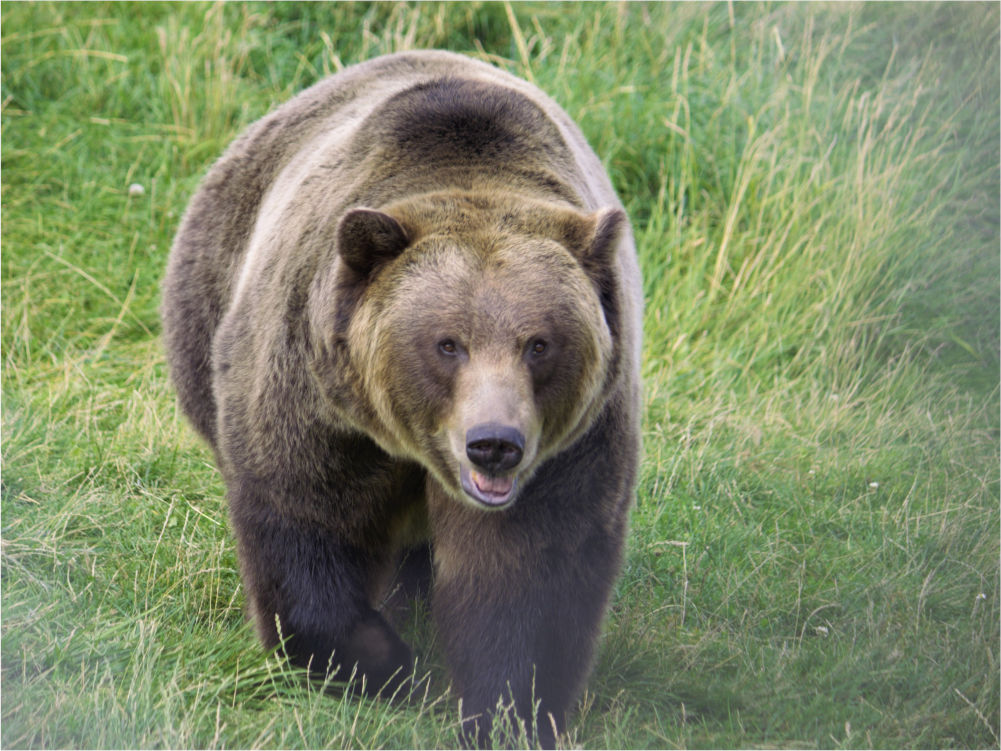
The largest carnivores of the Wild Clearwater, grizzly bears (also called the North American brown bear) were listed as a threatened species under the Endangered Species Act (ESA) in 1975.
Conservation status: Threatened
There are few animals more wondrous than the grizzly bear (Ursus arctos horribilis). Both physically large and intelligent, it is no surprise many call this omnivore the "Great Bear". Grizzly bears are ingrained into the fabric of the American West, in Indigenous stories, folk tales, and even the Californian flag.
Beginning in the 1800s, tens of thousands of grizzly bears (some 98% of the population in the lower 48 States) were shot, trapped, or poisoned to near extinction. In 1946, US Forest Service ranger Bud Moore saw one of the last signs of grizzly bears in the Clearwater—one dry footprint.
In 1975, grizzly bears were listed as a threatened species, surviving only in Glacier and Yellowstone National Parks, the Idaho Panhandle, and perhaps other remote areas.
In the 50 years since, populations have grown slowly and grizzly bears have expanded their ranges. Unfortunately, efforts to remove federal protections are frequent, developments in the wildland-urban-interface are accelerating, and grizzly mortality remains extremely high, almost entirely due to human pressures.
Central Idaho has the best unoccupied grizzly bear habitat in the lower 48 states, what one Montana researcher calls the "grizzly bear promised land". Since 2007, when a grizzly was illegally killed near Kelly Creek, several presumably male grizzly bears have been documented in Clearwater Country, but as of 2025 no known breeding population exists in north-central Idaho.
As of 2025, grizzly bears remain threatened and the US Fish and Wildlife Service is analyzing how to recover grizzly bears in the Bitterroot Ecosystem.
Description: Equipped with massive shoulders and muscular necks, females weigh between 300 – 450 lbs., with males averaging 400 – 800 lbs. Largest males can weigh over 1,000 lbs. Shoulder height is approximately 36 inches; body length is 72 – 96 inches. Run up to 35 mph and have long, non-retractable claws for digging. Brown – yellow – cinnamon fur with distinguishable back or shoulder hump (black bears do not have hump).
Diet: Largely omnivores, 70 – 80% of diet is vegetation, including roots, stems, leaves, flowers, nuts and berries. Adept at digging up insects, squirrel caches, marmot dens and mice. Also prey on larger mammals, particularly young elk, deer and moose. White-bark pine nuts historically invaluable source of nutrition; has severely declined in the Clearwater for several decades due to fungal disease and is declining in drier parts of the Rockies due to climate change. Other traditional food losses (salmon, steelhead trout, huckleberries) are also in decline.
Habitat: Once prominent along short-grass prairie of West; now largely limited to ridges, mountains, and forested landscapes of Northern Rockies. Require large tracts of protected landscapes with minimal road density and human disturbance. Denning usually begins October/November and hibernates throughout winter. During hibernation, grizzlies do not eat or drink, and very rarely urinate or defecate.
Range: Five designated recovery zones: Greater-Yellowstone, Northern Continental Divide, Cabinet-Yaak, Selkirk, and Bitterroot; latter includes portions of the Clearwater Basin. These recovery zones are geographically isolated—a major hurdle for true recovery. Long-term survival of grizzly bears in the United States requires connected habitat, for example between Yellowstone and the Bitterroot Ecosystem through the Centennial range. These corridors need to be included in designated recovery areas.
Reproduction: Produce cubs every other year or every three years; do not breed until 5-7 years of age. Typically mate June/July, but embryos do not implant until October/November if sow has adequate fat stores. Sows give birth (typically one or two, rarely as many as four) cubs in January. Cubs emerge from den in April/May with mother.
Threats: Road building, logging, habitat loss/fragmentation, poaching, and loss of high quality foods. Lack of connectivity (bears moving/breeding with bears in other recovery zones) is also a major threat.
Legal Status: Remain listed as threatened under Endangered Species Act despite wrongful attempts of federal government to remove from Endangered Species List.
Local Sightings: In 2007, a 500 – 600lb. male grizzly bear shot/killed in Kelly Creek drainage on Clearwater National Forest by client of local outfitter. DNA results indicate bear dispersed from Selkirk Mountains in North Idaho, the first confirmed grizzly bear in North Central Idaho in approximately sixty years.
In 2018, male grizzly appeared in Bitterroot Valley of Montana but was relocated north of I-90.
In 2019, at least two grizzly bears were confirmed in central Idaho, including near White Bird and Newsome Creek on the Nez Perce National Forest and near Lolo Pass on the Clearwater National Forest.
In April of 2020, grizzly tracks were confirmed just south of Grangeville, the first evidence of year-round grizzly presence in the Clearwater in decades.
In 2022, two grizzlies frequented the Bitterroot valley between Lolo and Florence, just east of the Selway-Bitterroot Wilderness. The Montana Dept. of Fish, Wildlife, and Parks captured the bears and released them in the Sapphire Mountains. The bears had "not yet been in conflict with people".
In 2024, a young male grizzly was shot at a black bear bait station near St. Maries, Idaho in the St. Joe watershed. According to news reports, the hunter had sent in video footage to the Idaho Department of Fish and Game to help identify the bear, since he was not sure if it was a cinnamon-colored black bear or a young grizzly. After shooting the bear, and discovering it was actually a grizzly, the hunter reported the incident to Idaho Fish and Game. Shockingly, an employee said via email "we don’t need griz in the Joe." This is further evidence that state-management of grizzly bears would be a serious loss to protection of the species.
In 2025, the IDFG updated black bear hunting rules to require completing an identification quiz online to distinguish grizzly and black bears.
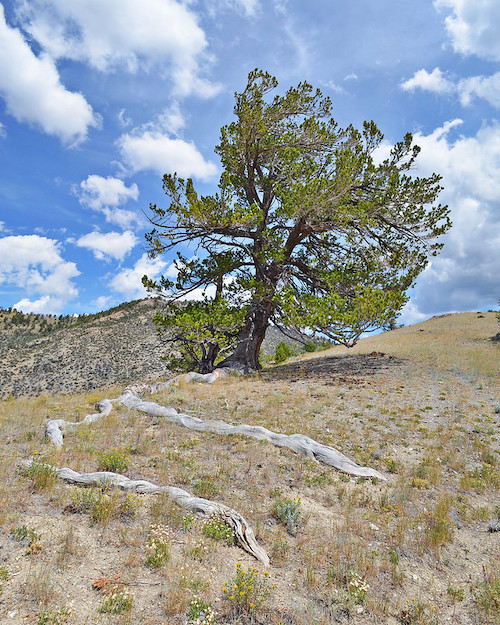
The Whitebark pine (Pinus albicaulis) is a tree found in high elevations. It is a keystone species of subalpine habitat, producing starchy pine nuts that many species rely on.
Conservation status: Threatened
It is a joy to see a mature whitebark pine. Unlike its neighbor the subalpine fir, which looks like a wizards hat in shape, the whitebark pine spreads its arms up, branches akimbo in the cold mountain air. Its broad canopy of needles all come in bunches of five, like its close relative the Western white pine.
The whitebark is adapted to the high mountains, in places above 6,000 feet (~1,800 meters). In this low-calorie landscape, the whitebark is a keystone species. Their starchy pine nuts sustain all sorts of high-elevation animals. Red squirrels create large caches of pine nuts, called middens, that grizzly bears often raid and devour, especially in fall and springtime.
A combination of forces have obliterated whole forests of whitebark pines. In late 2022, the US Fish and Wildlife Service (USFWS) listed the whitebark as threatened under the Endangered Species Act (ESA). This listing marks the first occasion in which a tree regarded as ecologically important in the United States is acknowledged as vulnerable to extinction.
Species Description: Member of the white pine group. Needles in fascicles (bundles) of five with a deciduous sheath. Lodgepole pine (Pinus contorta) has two needles per fascicle Ponderosa pine (Pinus ponderosa) and Jeffrey pine (Pinus jeffreyi) have three needles per fascicle.
Physical Characteristics: Whitish to light gray bark of young trees, older trees are darker. Generally highest-elevation pine tree found in its range, marks tree line. May be dwarfed by wind and exposure, referred to as "creeping pine". Can grow to 29 meters (95 ft) in favorable conditions.
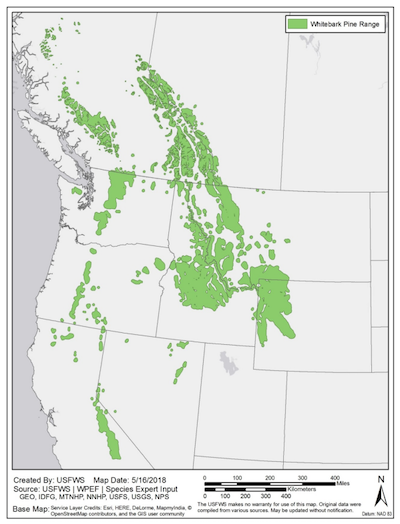
Ecology and Habitat: Trees are slow to mature and can live 1000 years.Produce seed cones after 25-30 years (peak production 60-80 years). Clark's nutcracker (Nucifraga columbiana) is the major seed disperser. Birds cache seeds in soil or gravelly substrate for future food source. Caches not retrieved contribute to forest regeneration. Thus, whitebark pine often grows in clumps of several trees, originating from a seed cache. Other animals also depend upon seeds. Douglas squirrels cache seed in middens. Grizzly bears and American black bears raid middens as an important pre-hibernation food. Squirrels, northern flickers, and mountain bluebirds use trees for nesting.
Range: Found at high elevation in Rocky Mountains, central British Columbia to western Wyoming and subalpine forests of Montana and Idaho. It occurs in the timberline zone of the Cascades and coastal ranges from British Columbia to the Sierra Nevada.
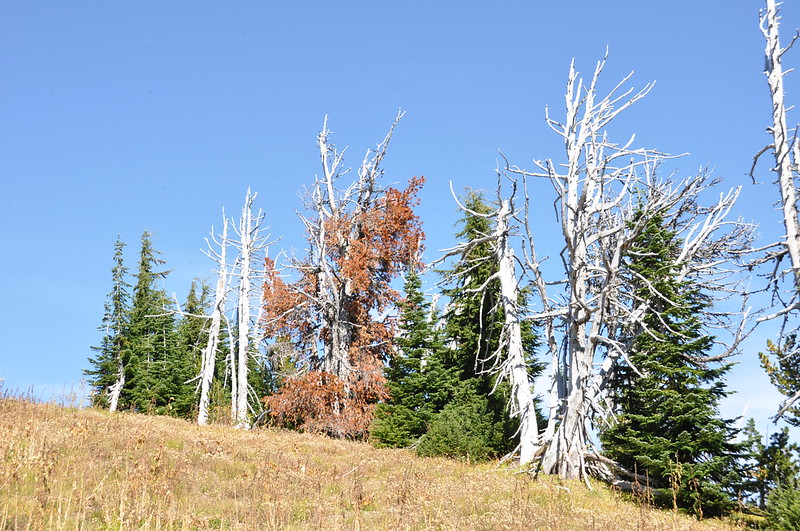
Threats: Most significant threat is white pine blister rust, a fungal disease introduced from Europe. More recent threats are mainly due to climate change such as expansion of native mountain pine beetles to higher elevations and altered forest succession. Warmer climate favors spreading of insect and fungal disease. Changes in fire regime (from climate or fire suppression) may affect insect and disease impacts or competition with other trees.
Misc: Native Americans roasted pine seeds, made porridge, and mixed seeds with berries.
This article was first published in the Spring 2024 edition of the Clearwater Defender. You can have the Defender delivered straight to your house when you become an FOC member.
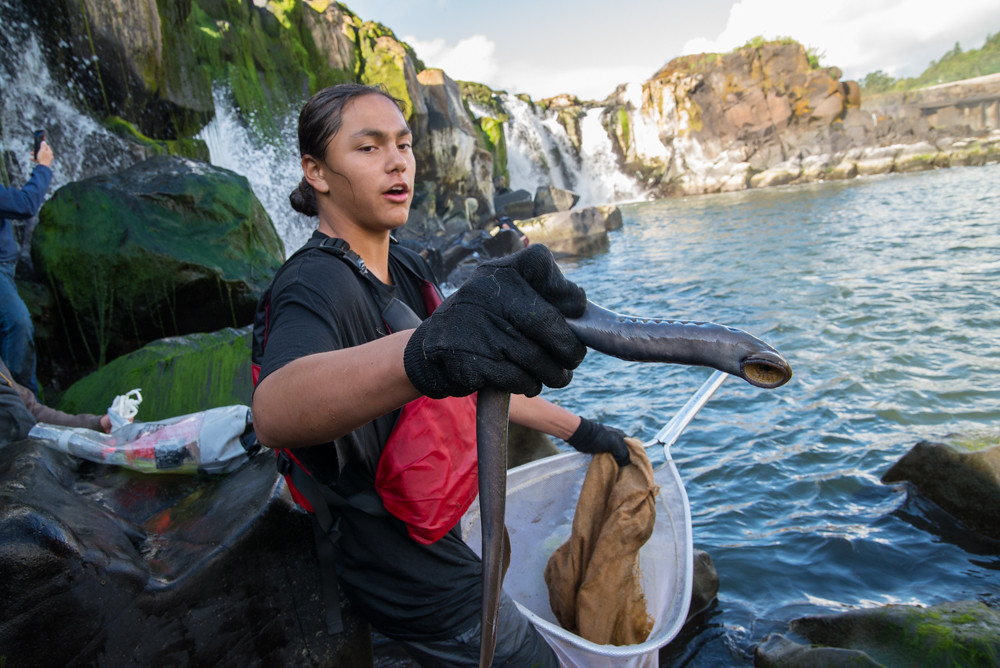
Pacific lamprey (Entosphenus tridentatus) are eel-shaped jawless fish. Lamprey aren’t actually eels, but a kind of very primitive cartilaginous fish, like sharks and rays. They were some of the very first fish to evolve, at least 350 million years ago during the Cambrian explosion – before trees existed! Instead of a jaw, they have a circular mouth filled with teeth, which adult lamprey use to suck blood and fluids from larger fish and whales in the ocean (but they don’t kill their host).
Like salmon, they are anadromous, meaning they migrate between the Pacific ocean and freshwater streams to spawn. They spawn in gravelly, cold-water streams like the South Fork of the Clearwater, laying upwards of 100,000 eggs in summer.
Unlike salmon, though, newly-hatched, eyeless lamprey drift into the slow moving parts of streams, dig themselves into the sand, and filter-feed on algae for up to six years. In this stage they are most sensitive to pollution and high temperatures.
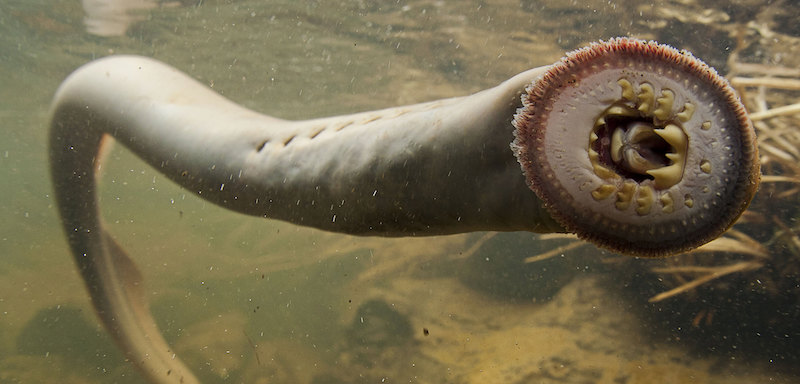
After their larval stage, they grow eyes and their circular-saw mouth, and start a long journey to the ocean. Little is known about their life at sea, but we do know that they attach themselves to a big host fish or whale for two years or more, just hanging on and sucking blood. After a buffet of liquid fish (and a big growth spurt), fattened adult lamprey start the journey back inland to spawn.
The way home is not easy! For one, adult lamprey don’t eat at all on the trip home, living solely off of fat reserves. For another, it’s very difficult for a mostly finless fish to get over falls and dams. They use their circular-saw mouths to latch on to and inch their way over boulders and waterfalls. Once they reach their spawning habitat, they mate and die, starting the cycle over again.
Like other anadromous fish, their survival depends on managing the four H’s: habitat, harvest, hatcheries, and hydropower. In particular, hydropower has led to enormous population declines. Lamprey are weak swimmers, and do not swim up fish ladders as easily as salmon and steelhead. Reservoirs also degrade lamprey spawning habitat and expose them to increased predation.
This collapse has harmed local Indigenous people. Lamprey are a key ceremonial food source of the Nez Perce and other Columbia Plateau Tribes, often caught by hand during migration. Their fatty meat is very nutritious and is often smoked and fed to children. Nez Perce Tribal elder Horace Axtell recalled:
“My great aunt was a medicine woman, and she would collect the fat that would drip off an eel as it was cooking over a fire. She would store the fat in a small bottle and use it for oil in lamps and for medicines.” (source: critfc.org)
White settlers largely overlooked the lamprey, or used them for bait. At the Celilo hatchery, (at the now-flooded Celilo falls), tens of thousands were caught and ground into fish food for salmon, basically propping up one rare species with another. It didn’t last long though. After the damming of northwestern rivers in the 1960s, populations collapsed.
In 2003, the Center for Biological Diversity and other northwest environmental groups petitioned the US Fish and Wildlife Service to list the fish on the Endangered Species Act. Unfortunately, the USFWS sidestepped listing lamprey as a threatened species, citing a lack of data.
Instead, they created a collaborative organization, the Pacific Lamprey Conservation Initiative, that has so far failed to alter the long-term declines of lamprey in the West. Such collaborative efforts are politically expedient but often legally unenforceable, undercutting the agency’s broad powers to protect our native wildlife.
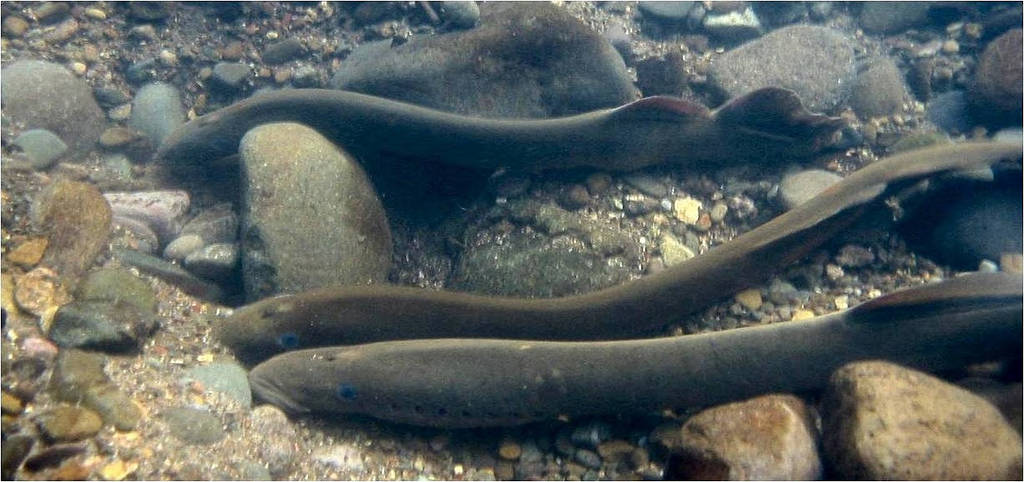
In the Clearwater, populations of lamprey are functionally extinct. The 10-year average returning lamprey at the Lower Granite Dam is only 102 per year, down from perhaps tens of thousands prior to hydropower. Almost all individual Clearwater and Snake River basin populations are listed as critically imperiled or possibly extinct, as per a 2019 USFWS assessment.
The exceptions are in areas adult fish have been reintroduced by the Nez Perce Fisheries, like Asotin Creek, the Grande Ronde River, and the South Fork of the Salmon River. The Nez Perce and other Northwest Tribes have been very active in advocating for and reintroducing lamprey.
The fate of the lamprey, much like for salmon and steelhead, depends on breaching the Lower Four Snake River dams. As of 2024, political efforts to breach the dams have stalled, though staunch opposition to breaching is waning as fish populations collapse.
Friends of the Clearwater advocates for a future without the Lower Snake Dams, and with Pacific lamprey, perhaps the strangest critter in Idaho.
Friends of the Clearwater
PO Box 9241
Moscow, ID 83843
(208) 882-9755