The following list is just some of the work that we do everyday to ensure that our public lands are used for their highest and greatest good—as refuge for Wild Nature.

The Trump administration set it's sights on rescinding the 2001 Roadless Rule in September. We, and thousands of others, sounded the alarm on this affront to wild areas.
More than 625,000 comments were submitted in the absurdly short time frame (21 days, as opposed to several months for the creation of the rule). More than 99.2% of the comments supported keeping the rule, according to one source.
There are some roadless areas under direct threat, including portions of the Grizzly and Old-growth 8 (see below). Friends of the Clearwater advocates for preserving all remaining roadless areas as wilderness—and winning as strong a rule as possible until then!
We filed a lawsuit to protect grizzly bear habitat and old growth areas on the Nez Perce-Clearwater National Forests. Eight timber sales, primarily on the Nez Perce portion of the forest, pose significant risks for wildlife and habitat.
These 8 timber sales would significantly harm recovering populations of grizzly bears in central Idaho, creating or opening 134 miles of roads and degrading habitat. Roads are the primary driver of grizzly bear mortality, largely because they increase opportunities for bear-human conflict.
The Bitterroot Ecosystem is called the "grizzly bear promised land" for its high-quality habitat. It needs to stay that way until the Great Bear is truly recovered.
Likewise, old growth areas are not adequately protected from logging by these projects. That is what initially brought us to litigate the Hungry Ridge and End of the World timber sales (which are included in this litigation) in the first place, which we first won in court in 2022.

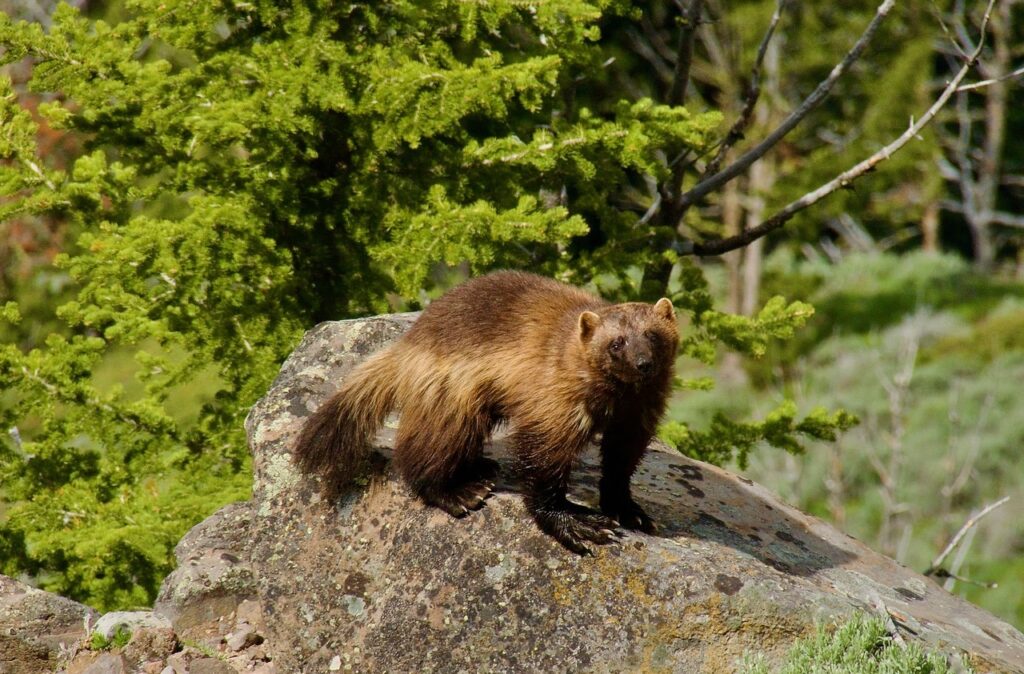
With only about 300 remaining in the lower 48, wolverines are exceedingly rare. In December 2023, they won protections under the Endangered Species Act because of a lawsuit brought by FOC and allies.
Locally, we are supporting our allies in the Panhandle by filing a notice of intent against a proposal to significantly expand winter over snow use in important wolverine habitat in the Selkirks of North Idaho.
Nationally, the next step is ensuring that critical habitat is adequately protected. We continue to monitor the actions of the US Fish and Wildlife Service, and are prepared to take necessary action to ensure that wolverines see timely protections.
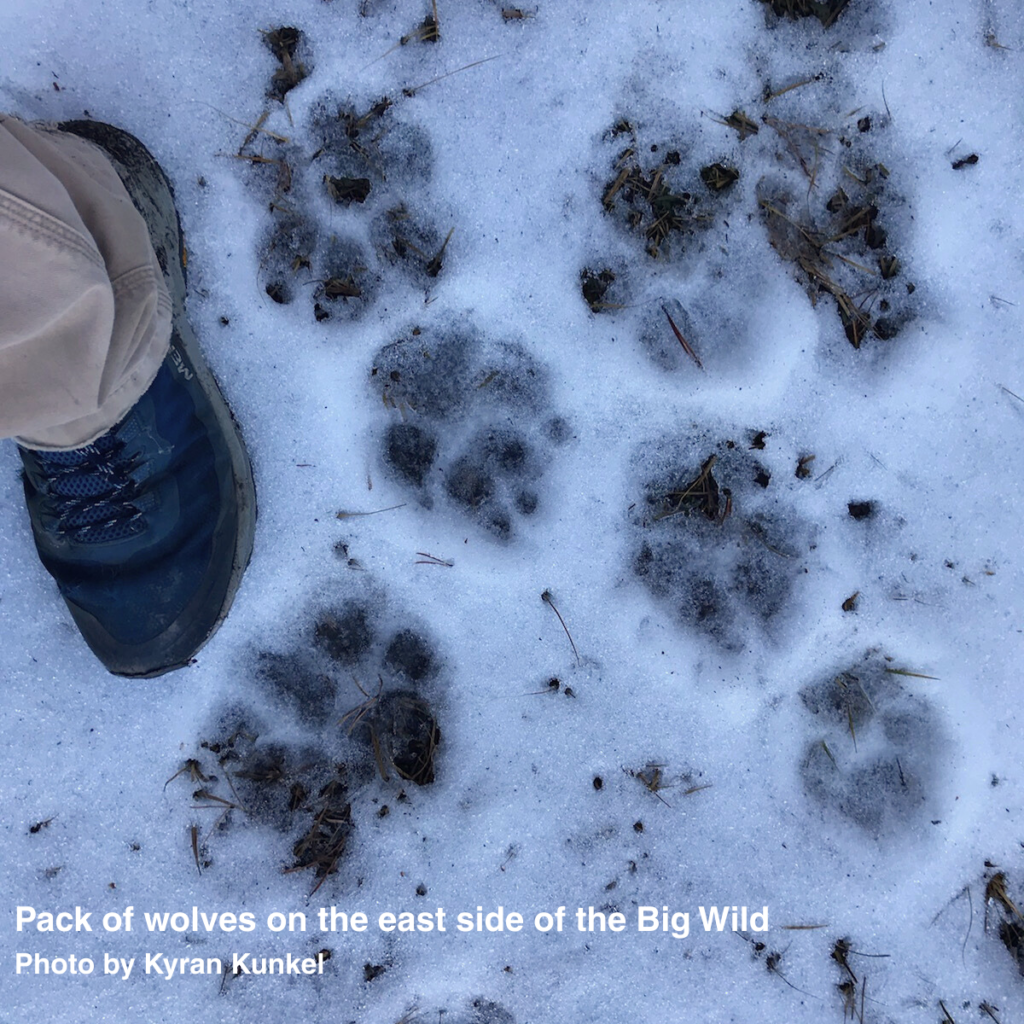
Due to the huge liberalization and unethical wolf harvest in the northern Rockies, we asked and received a Federal District Court ruling in our favor and ordering the U.S. Fish and Wildlife Service to reconsider its decision to not protect wolves under the Endangered Species Act. View article
Additionally, our efforts to reign in trapping of wolves in grizzly bear habitat was successful in 2024, leading to new regulations that have offered safety for the imperiled carnivore. We have continued that litigation in 2025.
FOC and allies filed a lawsuit in December 2024 challenging federal agencies’ plans to allow increased road building in the Bitterroot National Forest that would cause harm to grizzly bears and bull trout, both of which are listed as Threatened under the Endangered Species Act.
The lawsuit challenges the removal of Bitterroot Forest Plan Amendments that ensure road density standards. This litigation is a real team effort from Friends of the Bitterroot, Native Ecosystems Council, WildEarth Guardians, and Friends of the Clearwater.

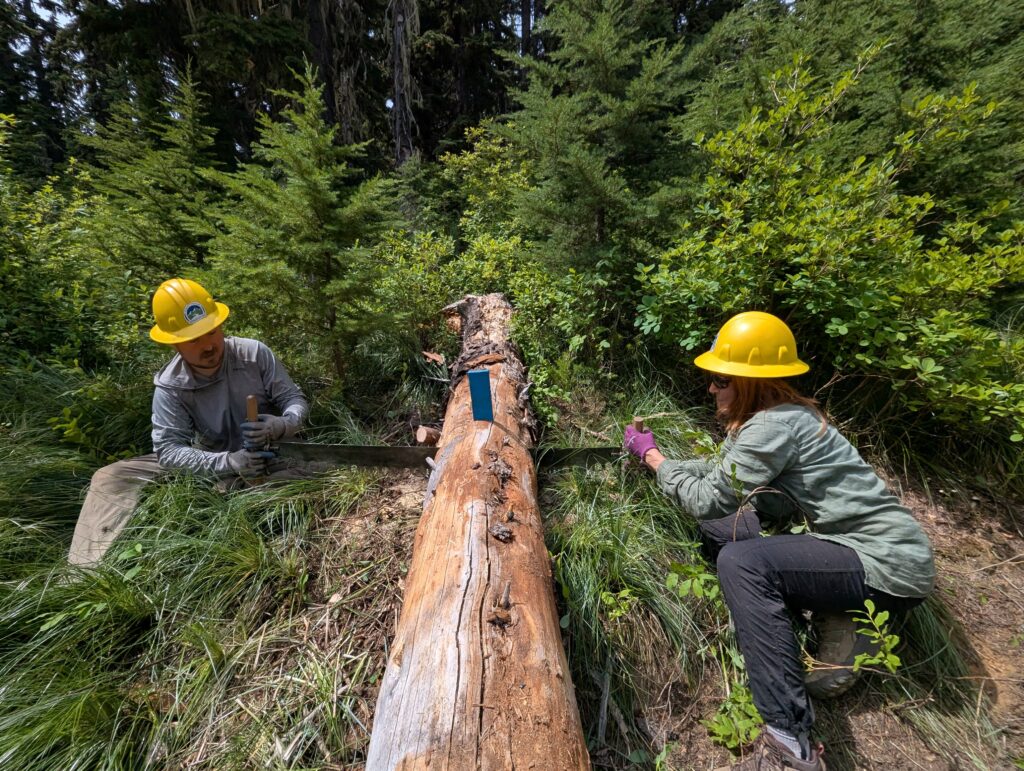
In 2025, we monitored 28 sites in the Nez Perce-Clearwater National Forest to ensure no violations of Wilderness, road closures, road building, timber harvest rules or water protections.
We found numerous violations we will send to US Forest Service to address, and work with our allies to discuss other steps to solve these violations. With Trump's huge cuts to public land agencies in 2025, there will be even less on the ground monitoring form the Forest Service.
We recently hired an Executive Director, Kyran Kunkel, and Office Manager, Krystal Starkey, to significantly ramp up FOC capacity.
This year, we reached more people, including over 3,000 people online via our email list. We have had over 50 new donors this year and are close to the milestone of 500 current dues-paying members.
We are also getting back into events and community actions, including potlucks, letter-writing events, concerts, and more.
We are building on nearly 40 years of results for the region, meeting the huge challenges of our era, and charting a new proactive course forward.
The FOC board unanimously approved our Big New Plan to protect the Wild Clearwater—more coming on that soon!
If you love native wildlife, consider a donation to Friends of the Clearwater to continue our work.

The Trump administration has opened a comment period starting this Friday, August 29th, in order to rescind the 2001 National Roadless Rule. That regulation largely limits road construction and logging on national forest wildlands in most of the United States. The US Department of Agriculture opened up a comment period today. Comments are accepted until September 19th.
This is essentially another version of a public lands selloff. This administration wants to sell out the public’s forests by opening remote, protected areas to logging, roadbuilding and other development that will forever change the character of these forest that belong to all of us.
With more than 9 million acres of roadless national forests, Idaho is the wildest state in the Lower 48. Our mission area boasts roughly 1.5 million acres of roadless forest, including iconic wild landscapes like the Great Burn, Meadow Creek, Mallard-Larkins, and Weitas Creek roadless areas.
As of today, the 2008 Idaho Roadless Rule, a (much weaker) regulation that governs those roadless areas in Idaho, has not been targeted by the Trump administration. However, we strongly encourage commenting on this important change in federal policy. The roadless rule is our best (and perhaps only) chance to protect wild national forests during this administration.
We need you to stand up for these irreplaceable wild places. Here are three basic talking points to inform your comment:
The 2001 Roadless Rule has limited development of wild public lands in most of the wild forests of the US. These are invaluable places for wildlife and backcountry recreation.
Roadless areas should have greater protections under federal regulations, not less. Existing loopholes in the Idaho, Colorado, and National rules can and should be closed.
The roadless rule should be re-written to include Idaho and Colorado, which are currently governed by much weaker regulations.
As always, Friends of the Clearwater recommends writing an individualized comment, not copying and pasting from organizations (including us!). Telling your personal story helps make your case. Have you hiked the Great Burn in Montana? Have you fished Weitas Creek in Idaho? Have you hunted in Nevada’s Ruby mountains?
Whatever is most important to you, whether it’s abundant wildlife, carbon-sequestering forests, or revitalizing solitude, is what is most important to say.
Where to comment: https://www.federalregister.gov/d/2025-16581

What are roadless areas?
Roadless areas are undeveloped national forest lands. They are essentially wilderness areas without congressional protection. Roadless and unroaded wild places have been in massive decline for the last century, caused by insatiable expansion of human infrastructure and exploitation. Today, roadless areas make up roughly 60 million acres of the national forests of the United States, or 2.5% of the entire country. The majority of those areas are located in Alaska and the Western half of the lower 48. Idaho has 9 million acres of roadless public lands, the most of any in the lower 48.
Wild, undeveloped areas on other public lands (managed by the BLM, USFWS, or NPS) are administered differently.
How do roadless areas protect wildlife?
Roadless areas are crucial for many kinds of wildlife. Elk herds benefit from the habitat security of places far from easy access by automobile or OHV. Several wild carnivores are essentially roadless-dependent, like grizzly bears and wolverines. Roadless watersheds are some of the most productive for cold-water fish in the region, like the salmon-bearing Meadow Creek, which is nearly entirely roadless.
How do roadless areas affect climate change?
Roadless areas are critical to reduce climate change impacts. American forests absorb roughly 1/3rd of the annual fossil emissions of the country. Many old-growth forests, which keep millions of tons of carbon out of the atmosphere for centuries or millennia, are found in roadless areas. Unlogged forests consistently store more carbon than logged forests.
Why are Idaho and Colorado not included in the 2001 Rule?
Roadless areas in Idaho and Colorado are currently governed by two state-specific federal rules. These rules are much more lenient for road-building and timber production than the national rule. Both states should be included on a stronger version of the national (2001) roadless rule.
Why is the Trump administration targeting wild public lands?
The Trump administration’s view of public lands is that they are only a source of raw materials for corporations. In order to hit the ludicrously high timber targets on the national forests, roadless areas would have to be opened up to much greater logging, roadbuilding, and development.
Are roadless areas wilderness?
Roadless areas are "wild" but not congressionally-designated wilderness areas. They are essentially unprotected wildernesses. Most congressionally-protected wildernesses were once inventoried roadless areas (IRAs). A small number of roadless areas are recommended for protection as wilderness by the US Forest Service, most are not.
How would NREPA change roadless protections?
The Northern Rockies Ecosystem Protection Act (NREPA) would permanently protect 20 million acres of roadless country as wilderness in six states. It has been introduced as recently as this year: https://allianceforthewildrockies.org/nrepa/
Is the 2001 Roadless Rule a law?
No. The Roadless Rule is a federal regulation that was created at the end of the Clinton administration. It is not a law, but is subject to the same standards of public process that other federal actions are. The Trump administration, more than any other, has a general disdain for the public process and legal accountability for the government and corporations.
Why is logging in roadless areas an issue?
Roadless areas tend to be in very steep, high elevation areas, like the more remote parts of the Rocky Mountains. These areas are very expensive to log, and timber projects on public lands almost always come at a loss to the tax-payer. The costs of fixing roads is immense (the Forest Service is the largest road manager on the planet, managing some 380,000 miles of active roads, roughly five times more mileage than the US interstate system), and the damages to wildlife are diverse and chronic.
“…trees and plants have agency. They perceive, relate, and communicate; they exercise various behaviors. They cooperate, make decisions, learn, and remember—qualities we normally ascribe to sentience, wisdom, intelligence.
"By noting how trees, animals, and even fungi—any and all nonhuman species—have this agency, we can acknowledge that they deserve as much regard as we accord ourselves.” —
Suzanne Simard, Finding the Mother Tree: Discovering the Wisdom of the Forest

In our efforts towards conservation of wild forests, we often invoke the concept of “biological diversity.” To most people, the term brings to mind the multitude of native fish, wildlife, and plant species and how those species interact with one another in our favorite wild places.
And during our visits to these places, although we often notice things like mushrooms or millipedes on the forest floor, seldom do we contemplate the diversity they might signify for the vast assemblage of species living beneath the ground’s surface.
"The soil harbors huge reservoirs of biological diversity, with over 40% of terrestrial organisms associated with soils during their life cycle."
The soil harbors huge reservoirs of biological diversity, with over 40% of terrestrial organisms associated with soils during their life cycle. This reservoir includes animals such as nematodes, oribatid mites, enchytraeids, tardigrades, springtails, ants, ground beetles, centipedes, millipedes and earthworms, fungi, the single-celled bacteria and archaea, and protists, (a kingdom separate from animals, plants or fungi which includes algae, amoebae and slime molds). Together these organisms comprise the “soil food web” where one thing eats another—or is eaten—and so forth.

Despite longstanding scientific investigation, general public awareness of this underground ecology has been limited. In recent years this has changed, thanks in part to groundbreaking research by ecologist Suzanne Simard of the University of British Columbia, and reports of her discoveries in popular media. Her research centers on connection and communication between organisms in forest ecosystems as facilitated by mycorrhizal (fungal) networks, and the intricate symbiotic relationships thus formed between organisms of different species.
“Most life on land depends ultimately on one relationship: the mycorrhiza, the intimate and mutually dependent coexistence of fungi and the root systems of plants.” — E.O. Wilson
The profound role of fungi was noted by the renowned biologist E.O. Wilson, who once wrote, “Most life on land depends ultimately on one relationship: the mycorrhiza, the intimate and mutually dependent coexistence of fungi and the root systems of plants.” Mushrooms, the fruiting body of fungi, are just the tip of the iceberg. The main fungal body is the mycelium, the mass of tissue growing in soil and other substrates such as dead wood or other biomass. In turn, mycorrhizae are part plant, part fungus, consisting of the mycelia and the roots of plants. But it is the mycorrhiza’s functions that are most fascinating.
Consider a genus of fungi, Rhizopogon, commonly known as a false truffle. They form mycorrhyzae with several conifer tree species. Mycorrhizae might appear as a swollen, whitish mass of mycelium surrounding the tips of tree roots. It is the structure where water and nutrients exchange between the Rhizopogon and the tree, to the benefit of both. The Rhizopogon mycelium absorbs water and other essential nutrients such as nitrogen from the soil more efficiently than roots, due to the fact that the hyphae (filaments that make up the mycelium) are able to penetrate small spaces and efficiently extend much more widely than tree roots. And while trees thus receive enhanced access to building blocks essential for growth in this symbiotic relationship, in turn the Rhizopogon feed on carbon (energy) in the form of plant sugars produced by trees. There are potentially multitudes of different fungal species in a given ecosystem, effecting similar and often quite different roles as networking entities.
The complexity of mycorrhizae’s ecological roles are astounding. Following a hunch, Simard fed CO2 concentrated with a radioactive carbon isotope to individual trees via plastic bags placed around their branches. Recall that plants need carbon dioxide from the atmosphere along with sunlight to photosynthesize and grow. To her delight, she soon found an increase in radioactive carbon in the composition of surrounding trees. It turns out that the mycorrhizal network facilitates sharing of nutrients between trees! And the trees don’t even have to be of the same species.
Trees can share water, nutrients, and even information between themselves
The plot thickens further. Scientists have found that large, old trees tend to be more connected to neighboring trees through this mycorrhizal network than the younger ones. These hub trees literally influence the health and fitness of all the trees in the forest, leading to the notion of “mother trees.” And they act selectively; feeding seedlings that might be shaded and therefore otherwise unable to survive. Or transferring resources from dying trees to healthy ones. Oddly enough, there are even accounts of the roots of stumps being kept alive through this network, years after the tree was cut and its photosynthesis halted. It even turns out hub trees can favor offspring from their own seed more than unrelated trees of the same species.
The complexity of chemical transmission between plants goes beyond nutrient transfer. Information itself is a currency. In the human body, glutamate and glycine are common neurotransmitters facilitating signals in brain and spinal tissue across synapses (the connections between neurons, or nerve cells). In plants, glutamine and glycine are involved in triggering the aforementioned exchange of nitrogen and carbon through mycorrhizal networks, and they also help to facilitate fundamental metabolic functions within plants. Experimentally, stress signals have been shown to transfer from injured plants to healthy ones across mycorrhizal networks even more rapidly than carbon, nutrients or water. Healthy plants can then produces defense enzymes, increasing their resistance to the pest afflicting their neighbors.
Since it’s commonly accepted that neural connections facilitating the functioning of the human brain and nervous system give rise to what we call “intelligence”, this begs the question—do trees, plants, or other non-animal life forms also possess intelligence? Our own nervous systems control internal biological functions, and also muscle activity effecting behaviors we see as signs of intelligence. So is this ecological entity we call a “forest“ exhibiting intelligence, given the complexity of the below-ground connectivity between organisms, given the behaviors it facilitates?

These communication networks not only appear underground. In response to attack by defoliating insects, trees transmit airborne volatile chemical signals. Scientists have found that, neighboring trees cued by those signals are able to marshal defenses against the defoliating insects.
Here’s an example of another, more complex network. Some fungi cause tree decay, leading to woodpeckers being able to excavate nest cavities, which are later used as nests and dens for other species, such as squirrels, who eat false truffles and thus spread spores, benefitting trees by the creation of mycorrhizal networks, which help to grow large trees, which eventually provide decaying wood structures for woodpeckers.
It turns out there are many such networks interacting with each other, nested within what is called a “meta-network.” These meta-networks provide for interactions and feedback among the various connected entities, leading to structure and function that define “complex adaptive systems.” In such systems, change and adaptation occur constantly as a result of these interactions. Is this intelligence?
Some would answer yes, because individuals they study perceive, process, and communicate with other organisms and the environment, and remember and use this information to learn, adapt, and heal themselves and others. Another scientific view is that, within this meta-network, a forest’s mycorrhizal networks are most crucial in organizing other networks, given their critical role in establishment and growth of trees. Fungi are “keystone” species because they are vital nodes in this network of connectivity. Russula brevipes, for example, is a fungal keystone species which has the most connections to other species in mature forest ecosystems.
This essay barely scratches the surface of what scientists have discovered about these complex adaptive systems. And of course, science itself is a process that leads to far more questions than answers. But clearly, as major actors on this stage of life on earth, humans play an outsized role. And far too often, our acts sever natural connections, resulting in vast unintended consequences, literally shaking the foundation of the life-giving biosphere, these complex adaptive systems that have given rise to our very existence.
"What does matter—to our very survival—is what humans believe about other living things"
This calls into question what exactly is “intelligence”, and who or what actually possesses it. Because the term is of our own creation, perhaps the question itself is not so relevant. What does matter—to our very survival—is what humans believe about other living things, forests, ecosystems, and even the entire biosphere, and our actions based on those beliefs, and ultimately, the consequences of our actions. For example, in North America what little is left of the vast, pre-settlement extent of old-growth forests is still being targeted for clearcutting—even in national forests. Also, in the U.S. Northern Rockies “treatments” are proposed allegedly to “enhance” old growth, reflecting the prevailing management paradigm of dominating and controlling nature rather than acting in harmony in the acknowledgement that we actually know so little about these wondrous forests. Does anyone really believe that ripping centuries old trees from the web of life is enhancing anything but greed?

In “The Social Life of Forests” writer Ferris Jabr wrote in the New York Times, “The razing of an old-growth forest is not just the destruction of magnificent individual trees—it’s the collapse of an ancient republic whose interspecies covenant of reciprocation and compromise is essential for the survival of Earth as we’ve known it.” This theme of reciprocation, between humans and the plants, animals, and spirits of the natural world, is common in the myths, lessons, and other stories handed down over countless generations of aboriginal peoples. This wisdom has been largely dismissed by the empires that have largely conquered and displaced native cultures, too often with tragic genocidal consequences. To the degree we yet fail to heed this ancient wisdom, western civilization—and humanity itself—approaches the brink of its own tragic demise.
Of her book “Finding the Mother Tree” Suzanne Simard states:
“This is a book—not so much about us saving trees, it’s more about how the trees will save us.”
The connections she describes are lessons to us, from the trees and from everything they touch. If we heed those lessons—if we allow ourselves to feel the connections—like the mother trees we will be able to grow, heal and truly enhance.

Old timers might call this Defender’s Species Spotlight the fisher cat. But the fisher (Pekania pennanti) is not a cat, nor does it eat fish. It might better be called the porcupine-eating weasel, and is one of the rarest carnivores in the Clearwater Basin.
Conservation status: Pacific populations are threatened; Northern Rockies populations are not listed.

Fishers are cat-sized carnivores closely related to pine martens and wolverines, adapted to the northern forests of North America. They are adept at climbing trees in search of prey or to escape larger predators. Fishers are solitary generalists, roaming the forest in search of any prey they can get their paws on, primarily squirrels, rabbits, hares, mice, and porcupines.
Porcupines are the most infamous of fisher’s prey. Fishers seem to be the only common predator of the needle-armored rodents, so much so that timber companies have re-introduced fishers to reduce porcupine impacts on saplings. Fishers aggressively target the porcupine’s face—the only part of its body without quills—until it dies and can be dismembered. For large prey, fishers will store pieces of their prey in caches to finish eating later.
Fishers live in closed-canopy forests. They tend to live in lower elevations than pine martens or wolverines. Like other wild carnivores, their presence is an indicator of ecological health. While fishers in the American Northeast seem to be expanding, populations in the Pacific ranges and Northern Rockies are in decline.

Fishers are solitary except during mating season in spring. Gestation, however, is delayed until the next February, nearly a whole year. After a 50-day gestation, females give birth to one to four kits. Like other weasels, fishers use two dens, giving birth in one and moving the kits to a different den to raise their young. Dens are usually in hollow trees, so older forests are key for denning habitat. Kits are altricial, born blind and wholly dependent on their mother. After about seven weeks, kits open their eyes. They feed only on milk for eight to ten weeks before weaning. At five months old, juveniles are forced out on their own.
Wolverines and the Latin American tayra are the fishers closest relatives, all of which are part of subfamily Gulonidnae, which includes martens and the sable. Fossil records seem to show that American mustelids evolved in Eurasia and dispersed several times over land bridges.[1]
The earliest conclusive fisher fossil was found in the John Day Fossil Beds National Monument in Oregon.[2] That fossil, a portion of an upper jaw and several teeth, is around 7 million years old. According to researchers, the fossil had larger teeth than today’s fishers, more closely resembling the teeth of present-day wolverines.

Trappers and farmers killed off most fishers in the 19th and 20th centuries, the former to sell fur and the latter to protect poultry. Prior to White American settlement, fishers occupied the boreal forests of Canada, the Pacific Coast forests, the Northern Rockies, and the Eastern hardwood forests as far south as Georgia. However, they were extirpated in the US south and had dramatic range reductions elsewhere. According to some researchers, fisher populations are now growing in New England and Eastern Canada, where some mature hardwood forests have recovered. In the early 2000s, fishers were reintroduced into Tennessee.[3]
On the West Coast, the Pacific subspecies of fisher is at risk of extinction.[4] Old-growth logging continues to reduce their habitat and rodenticide (both legal, as used on tree farms, and illegal, as used in marijuana farms) has led to increased mortality. The Pacific fisher used to roam from western Washington south into California; today two isolated populations exist in the Klamath-Siskiyou region and the southern Sierras. Reintroductions have taken place at Olympic and Mount Rainier National Park in Washington State.[5]

Fishers in the Northern Rockies do not have the protections of their West Coast counterparts. Fishers are one of the most elusive carnivores of the Clearwater and their exact population in the Northern Rockies is uncertain. For decades, it was believed all fishers in North Idaho and northwest Montana were descended from reintroduced animals; genetic research in 2006[6] showed that there was a small population of fishers in the Clearwater and Bitterroot mountains that was never extirpated. That genetic group, or haplotype, is unique to Clearwater country.
Research in Idaho in 2019 shows that those fishers in the Clearwater and Bitterroot are isolated from fishers in the Cabinet and Purcell ranges further north[7]. A larger hair-trap study between Idaho Fish and Game and Montana Fish Wildlife and Parks assessed fisher occupancy in Idaho and Montana in 2020[8].
Habitat loss is the primary threat to Idaho’s fisher population, due to logging in mature and old-growth forests. The U.S. Forest Service overarching goal to clearcut North Idaho’s mesic pine-fir forests and replace them with ponderosa-larch plantations is not compatible with fisher survival, based on fisher’s preference for older, taller, structurally complex forests.[9] Rodenticide use, especially on private timberlands, may be a problem as well. Incidental trapping of fishers in Idaho as well as vehicle collisions[10] have been documented. Wildfire may harm fisher populations, though this is based on models and not first-hand data.[11]
The Center for Biological Diversity petitioned the US Fish and Wildlife Service to list the Northern Rockies fisher as endangered in 2009 and 2013 (supported by Friends of the Clearwater and other groups).[12] The USFWS declined to list both times. As of 2025, fishers can still be legally trapped in Montana, and their habitat continues to be targeted for clearcutting across the region.
Other work referenced:
https://www.science.smith.edu/departments/Biology/VHAYSSEN/msi/pdf/i0076-3519-156-01-0001.pdf
https://northcascades.org/pacific-fisher/
https://thefurbearers.com/blog/the-fisher-pekania-pennanti
https://idfg.idaho.gov/species/taxa/18029
[1] https://bmcbiol.biomedcentral.com/articles/10.1186/1741-7007-6-10
[2] https://www.tandfonline.com/doi/full/10.1080/02724634.2013.722155#d1e541Species Fisher.doc
[3] https://www.chattanoogan.com/2001/11/7/14644/Elusive-Fishers-Make-Quiet-Return-to.aspxSpecies Fisher.doc
[4] https://www.fws.gov/species/fisher-pekania-pennanti
[5] https://www.nps.gov/olym/learn/nature/fisher-reintroduction.htm
[6] https://doi.org/10.1644/06-MAMM-A-217R1.1
[7] https://www.webpages.uidaho.edu/~jacks/Lucid.Fisher.2019.pdf
[8] https://fwp.mt.gov/binaries/content/assets/fwp/conservation/wildlife-reports/8-mfwp-fisher-study-annual-report-2020.pdfSpecies Fisher.doc
[9] https://research.fs.usda.gov/treesearch/download/52272.pdf
[10] https://www.inaturalist.org/observations/7380879
[11] https://research.fs.usda.gov/treesearch/64266
[12] https://www.biologicaldiversity.org/species/mammals/fisher/
Read the full documents and comment online here:
https://www.regulations.gov/docket/FWS-R6-ES-2024-0186/document
The US Fish and Wildlife Service (USFWS) is changing direction on grizzly bear management in the Northern Rockies. This proposed rule would guide management and set rules on human activities throughout the region.
Biologists and wildlife activists have long advocated for grizzly bears to be managed as one large population instead of isolated islands in the national parks. One connected population of a minimum of 3,000 to 5,000 grizzly bears is necessary to prevent extinction long term, especially with the onset of dramatic climate change.
We do need a large, connected population of bears in the Northern Rockies, which this rule claims to do.
Unfortunately, this rule aims to create a distinct population segment (DPS) for only the Northern Rockies, meaning that restoration of grizzly bears in the Wasatch Front, Southern Rockies, Sierra Nevada, and elsewhere is off the table. Any grizzlies outside the Northern Rockies would lose ESA protections. Even this DPS boundary is political and arbitrary—Oregon's Blue Mountains and Utah's Uinta Mountains are left off.
It doesn't. The proposed rule uses the same five "recovery areas" that are in place today, which do not connect. The proposed rule acknowledges the need for connective habitat, but such places should be explicitly included in recovery area boundaries. Additionally, because of the 4(d) change, grizzly bears outside of recovery zones would have less protection.
The recovery areas in Idaho in this proposed rule are the same as they currently are. This includes part of the Selkirk, a portion of the Cabinet-Yaak, a portion of the Greater Yellowstone, and the so-called Bitterroot Ecosystem, which is the combination of the Selway-Bitterroot and Frank Church-River of No Return Wildernesses.

No! They are political boundaries that would allow grizzlies in some wilderness and little else. There are better alternatives to these that are based on habitat quality, while still remaining on public land.
The map below, created by Mike Bader and Paul Sieracki, shows what a larger Bitterroot Recovery Area would look like. This map includes important habitat outside of wilderness like in the Nez Perce-Clearwater, Payette, Boise, and Custer-Gallatin National Forests.

Section 4(d) of the Endangered Species Act details regulations on harming threatened and endangered species. It also, controversially, allows for limited "take" or harm of a species under certain conditions.
In this version of the rule, state agencies and livestock producers would be granted broad authority to kill grizzlies they deem a threat—even when non-lethal deterrents haven’t been exhausted.
The rule could lead to:
No! Grizzly bears have no fear when food is near. The primary conflict between humans and bears is because of unsecured (human) food, trash, and livestock. This usually results in humans shooting the bear. Even as a protected species, 85% of grizzly bear mortality is human caused.
Creating serious standards for food and livestock in bear country is critical to reducing conflict, something that this proposed rule does not seriously address.
This version of the rule has problems. Public opinion swayed the USFWS before, and we can do it again. It's important to urge for strong protections for wildlife that are based in science and can make coexistence possible.
Friends of the Clearwater and our allies have created an outline for what better grizzly bear management in the Northern Rockies might look like.
You can read that PDF below!
New-vision-for-grizzly-bear-recovery-in-the-northern-rocky-mountains-FINAL
The US Fish and Wildlife Service is seeking comments on how the agency should direct grizzly bear recovery in the Lower 48. Read the PDF at the bottom of this page to inform your comments!
Make your comment here. The comment period closes Monday, March 17th.
EDITOR'S NOTE: Demographic information like population and inhabited range in this article refer to grizzly bears in the Lower 48 States unless otherwise stated.
Grizzly bears (Ursus arctos horribilis) are one of the great symbols of the American West, synonymous with wildness and might—and they are still threatened.
Since the US Fish and Wildlife Service (USFWS) first listed them in 1975, they have also been synonymous with Western politics, and their legal status continues to fuel debate.
In early 2025, thanks to many of your comments, the USFWS decided to keep grizzly bears listed as threatened in the Lower 48. They also announced a process to redefine how they manage the species in the Northern Rockies.
That announcement (and the accompanying rule-making process) has good and bad elements. Ultimately, their primary aim is to prevent grizzly extinction. So how do you do that?
When a species is listed as threatened or endangered, federal agencies often create rules and regulations to protect them. The Endangered Species Act is explicit about the scope of these protections and clear about the imperative to prevent extinction for every species.
However, removing protections, or "de-listing" has been less obvious. This ambiguity has plagued wildlife policy for decades, including for grizzly bears.
Some argue that grizzlies are already recovered, and so should be removed from protections. If you compare grizzly bear populations and occupied range between 1960 and present day, they argue, there are some reasons to be optimistic; populations in the Lower 48 have increased by 50% and grizzlies have expanded their range.
This is misleading. Presenting the information this way sets the baseline at 1960, when grizzly bears were nearly extinct. Prior to Euro-American settlement, there were an estimated 30,000 grizzly bears in the Lower 48.

Instead of comparing today to when grizzlies were almost extinct in 1960, let's compare today to when they were abundant in 1750. Using the same numbers, grizzly bears have increased from 2% of their 1750 population... to 3%.
Is a 1% increase "recovery"? Is that "restoration"? Is that reason enough to open up trophy hunting?
This context is vital to any discussion about grizzly bear recovery. For the last several decades, Western bureaucrats and their corporate constituents have argued that grizzly bears are fully recovered and must be removed from the Endangered Species List. Their reasoning relies on the baseline of 1960, when grizzlies were nearly limited to only Glacier and Yellowstone National Park.
It also ignores that humans are still responsible for 85% of grizzly bear fatalities while they are currently protected.
The best available research suggests that grizzly bears need a connected population of 3,000 to 5,000 in the Northern Rockies to ensure their survival for centuries to come.
Isolated populations of grizzly bears pose long-term risks. In Yellowstone National Park, whitebark pine trees, an important food source for grizzly bears, have all but died out. In Glacier National Park, berry production has become erratic with climate change. In the Selkirk and Cabinet-Yaak ecosystems, roads, recreation, and black bear hunting have kept those populations extremely small and genetically at risk of in-breeding.
Because of these pressures, as well as lethal "management" by wildlife agencies, it is very unlikely that the current population and distribution of bears is sustainable in the long run.

The vast wildlands of Central Idaho could provide a massive benefit to grizzly bears. One Montana grizzly bear researcher calls it the "grizzly bear promised land". This vast wild country could support hundreds of bears, and act as a genetic link between grizzlies in the Northern Continental Divide Ecosystem (near Glacier Nat'l Park) and the Greater Yellowstone Ecosystem.
Simply put, there is no "recovery" of grizzly bears in the Lower 48 until Idaho gets its bears back.
Claiming that a few hundred grizzly bears living outside national parks constitutes full recovery is bogus. Likewise, aiming for 30,000 grizzly bears in the American West is impossible (at least without a lot of zoos).
So what is a meaningful goal for grizzly recovery in the Northern Rockies?
Friends of the Clearwater, along with a diverse coalition of public lands and wildlife advocates, has outlined what that might look like. We've condensed a lot of science and policy into a vision for the sustainable management of grizzly bears.
This vision aims for meaningful policy in the Northern Rockies to ensure grizzly survival. Some of the more tangible points include:
And more. It's time to stop advocating for below the "bear minimum". We need to think big, act fast, and make sure that real protection can become law of the land.
You can read our vision in the embedded PDF below, open it in a new tab, or download it at the bottom of this page.
New-vision-for-grizzly-bear-recovery-in-the-northern-rocky-mountains-FINALThis article was first published in the Spring 2024 edition of the Clearwater Defender. You can have the Defender delivered straight to your house when you become an FOC member.
Pacific lamprey (Entosphenus tridentatus) are eel-shaped jawless fish. Lamprey aren’t actually eels, but a kind of very primitive cartiliginous fish, like sharks and rays. They were some of the very first fish to evolve, at least 350 million years ago during the Cambrian explosion – before trees existed! Instead of a jaw, they have a circular mouth filled with teeth, which adult lamprey use to suck blood and fluids from larger fish and whales in the ocean (but they don’t kill their host).
Like salmon, they are anadromous, meaning they migrate between the Pacific ocean and freshwater streams to spawn. They spawn in gravelly, cold-water streams like the South Fork of the Clearwater, laying upwards of 100,000 eggs in summer.
Unlike salmon, though, newly-hatched, eyeless lamprey drift into the slow moving parts of streams, dig themselves into the sand, and filter-feed on algae for up to six years. In this stage they are most sensitive to pollution and high temperatures.

After their larval stage, they grow eyes and their circular-saw mouth, and start a long journey to the ocean. Little is known about their life at sea, but we do know that they attach themselves to a big host fish or whale for two years or more, just hanging on and sucking blood. After a buffet of liquid fish (and a big growth spurt), fattened adult lamprey start the journey back inland to spawn.
The way home is not easy! For one, adult lamprey don’t eat at all on the trip home, living solely off of fat reserves. For another, it’s very difficult for a mostly finless fish to get over falls and dams. They use their circular-saw mouths to latch on to and inch their way over boulders and waterfalls. Once they reach their spawning habitat, they mate and die, starting the cycle over again.

Like other anadromous fish, their survival depends on managing the four H’s: habitat, harvest, hatcheries, and hydropower. In particular, hydropower has led to enormous population declines. Lamprey are weak swimmers, and do not swim up fish ladders as easily as salmon and steelhead. Reservoirs also degrade lamprey spawning habitat and expose them to increased predation.
This collapse has harmed local Indigenous people. Lamprey are a key ceremonial food source of the Nez Perce and other Columbia Plateau Tribes, often caught by hand during migration. Their fatty meat is very nutritious and is often smoked and fed to children. Nez Perce Tribal elder Horace Axtell recalled:
“My great aunt was a medicine woman, and she would collect the fat that would drip off an eel as it was cooking over a fire. She would store the fat in a small bottle and use it for oil in lamps and for medicines.” (source: critfc.org)
White settlers largely overlooked the lamprey, or used them for bait. At the Celilo hatchery, (at the now-flooded Celilo falls), tens of thousands were caught and ground into fish food for salmon, basically propping up one rare species with another. It didn’t last long though. After the damming of northwestern rivers in the 1960s, populations collapsed.
In 2003, the Center for Biological Diversity and other northwest environmental groups petitioned the US Fish and Wildlife Service to list the fish on the Endangered Species Act. Unfortunately, the USFWS sidestepped listing lamprey as a threatened species, citing a lack of data.
Instead, they created a collaborative organization, the Pacific Lamprey Conservation Initiative, that has so far failed to alter the long-term declines of lamprey in the West. Such collaborative efforts are politically expedient but often legally unenforceable, undercutting the agency’s broad powers to protect our native wildlife.

In the Clearwater, populations of lamprey are functionally extinct. The 10-year average returning lamprey at the Lower Granite Dam is only 102 per year, down from perhaps tens of thousands prior to hydropower. Almost all individual Clearwater and Snake River basin populations are listed as critically imperiled or possibly extinct, as per a 2019 USFWS assessment.
The exceptions are in areas adult fish have been reintroduced by the Nez Perce Fisheries, like Asotin Creek, the Grande Ronde River, and the South Fork of the Salmon River. The Nez Perce and other Northwest Tribes have been very active in advocating for and reintroducing lamprey.
The fate of the lamprey, much like for salmon and steelhead, depends on breaching the Lower Four Snake River dams. As of 2024, political efforts to breach the dams have stalled, though staunch opposition to breaching is waning as fish populations collapse.
Friends of the Clearwater advocates for a future without the Lower Snake Dams, and with Pacific lamprey, perhaps the strangest critter in Idaho.
NOTE: This article was published in the Spring 2024 edition of the Clearwater Defender, and is now somewhat dated. If you are interested in receiving articles like these to your home or inbox, consider becoming a member here.

In last summer’s Defender (summer 2023) we reported on the results of a lawsuit resulting in a federal court judge ordering the U.S. Fish & Wildlife Service (USFWS) to update an Environmental Impact Statement (EIS) from 2000 outlining federal government actions to recover grizzly bears in the Bitterroot Ecosystem (BE). Since the court’s decision, the USFWS submitted a timeline for updating the EIS that included an initial 60-day scoping (public comment) period, which ended March 18, 2024.
The EIS will consider options for restoring grizzly bears to the BE, a geographic area mostly in Idaho with a very sparse grizzly population, but has nevertheless been identified as important for recovering this threatened species across its former range.
During the scoping period, a coalition of organizations including FOC submitted a letter describing the Citizen Alternative: Natural Recovery with ESA Protection and Connectivity Areas. “Natural Recovery” under this Citizen Alternative means taking actions to facilitate natural immigration from other areas with denser grizzly populations.

Under our Natural Recovery alternative, the BE—the primary geographic recovery unit—would be expanded to 21,612 square miles, encompassing the Selway-Bitterroot, Frank Church-River of No Return and Gospel Hump Wildernesses and surrounding primarily federal public lands on the Nez Perce- Clearwater and six adjoining National Forests. This boundary delineation is informed by the results of numerous peer-reviewed and published analyses of grizzly bear habitat potential.
"Already the USFWS too often authorizes lethal and other heavy handed control actions as grizzly bears [a federally-protected species] come into conflicts."
Our Natural Recovery alternative also establishes a larger BE Demographic Monitoring Area, which includes a buffer zone 10 miles wide surrounding the Recovery Area plus Connectivity Areas linking the BE to three others: the Cabinet-Yaak, Northern Continental Divide and Greater Yellowstone. This would direct the USFWS to prepare a Conservation Strategy with DMA management recommendations for the
Forest Service, Bureau of Land Management (BLM) and the states of Idaho and Montana. The Conservation Strategy would set standards to be amended into land management plans for the national forest and BLM lands within the DMA.
Standards and other measures in our Natural Recovery alternative are intended to increase habitat security for bears. These include:
The Natural Recovery alternative also calls for:
Based on the USFWS’s original solicitation for comments (found at https://www. fws.gov/BitterrootEIS along with more information), the agency may be favoring an alternative featuring artificial population augmentation. This means trapping and relocating grizzly bears from other recovery zones into the BE to establish an “experimental, nonessential population” of grizzly bears under the 10(j) rule of the Endangered Species Act (ESA). FOC opposes this idea for three major reasons. For one, under 10(j) grizzlies in the BE would not enjoy full protections as a Threatened species under the ESA. Already the USFWS too often authorizes lethal and other heavy-handed control actions as grizzly bears come into conflicts, so the agency would be even less likely to favor nonlethal actions for individual bears. Second, research has shown that people in Idaho would be far more accepting of grizzly bears naturally repopulating than “government bears” brought in artificially. Finally, the USFWS is likely to keep its unscientific 2000 recovery area boundary, which is too small to support a viable population and assist with grizzly bear recovery across the Northern Rockies.
From USFWS’s timeline, the next (and perhaps only remaining) formal public input opportunity will be in July 2025 when the draft EIS is issued for a 60-day comment period. After that, the agency anticipates issuing a final Record of Decision in October 2026. If the decision is to declare and/or establish an “experimental, nonessential” population, the USFWS would institute a subsequent rulemaking under section 10(j) of the ESA soon after.
The USFWS needs to hear support for our Natural Recovery alternative and strong opposition to any experimental, nonessential 10(j) rule. Please go to our website under www.friendsoftheclearwater.org/grizzly-bear- recovery/ to find our comment letters describing the Natural Recovery alternative, an alert with talking points, and a link for sending an email to USFWS director Martha Williams.
On April 8, wildlife advocacy and conservation groups including Friends of the Clearwater filed a lawsuit in the U.S. District Court of Montana, intending to gain protections under the Endangered Species Act (ESA) for the gray wolf in the states of Idaho, Montana and Wyoming. This action comes on the heels of the Feb. 7 determination by the U.S. Fish and Wildlife Service (USFWS) that the Western U.S. distinct population segment (“DPS”) does not warrant listing as an endangered or threatened species under the ESA. FOC is joined by Nimiipuu Protecting the Environment, Western Watersheds Project, Wilderness Watch, Protect the Wolves, WildEarth Guardians, Trap Free Montana, International Wildlife Coexistence Network, Alliance for the Wild Rockies and Predator Defense in this litigation, with Kelly Nokes at Western Environmental Law Center as lead attorney.

The status of the gray wolf under the ESA is long and complicated. Adoption of a 1978 rule made it one of the first species listed as Endangered. Decades later, after both artificial reintroduction and natural recovery in the western U.S. had expanded the wolf population, political pressure built towards delisting. Litigation halted USFWS delisting of the Western DPS in 2008, and again in 2009 for a Northern Rocky Mountains (“NRM”) subpopulation including Montana and Idaho. But in 2011, in what was widely seen
as an election year move, Senator Jon Tester (MT) attached a legislative rider that delisted wolves in Montana and Idaho. Litigation prevented delisting of wolves in Wyoming in 2012, but by 2017 it was court- approved.
Then in 2021, FOC as part of a coalition of dozens of groups petitioned the USFWS to re-list the gray wolf Western U.S. DPS, citing “new laws in Idaho and Montana, and longstanding wolf management in Wyoming ...intended to reduce gray wolf populations in the core wolf recovery zone by 85 to 90 percent by incentivizing wolf killing and authorizing use of new methods to kill wolves.” That spurred a USFWS Status Review which preceded their “not warranted” determination, leading to our latest legal efforts.

Regardless of the abject cruelty demonstrated by states’ promotion of aggressive killing regimes that feature aerial gunning, killing pups for bounties, widespread traps and snares, night hunting, shooting over bait, and even running them over with snowmobiles, the decimation of wolf populations makes no sense ecologically. The many ecosystem types wolves inhabit are unique communities of plant and animal life enhanced by the healthy wolf populations and predator- prey relationships. Wolves have been described as a keystone species, and scientists have noted its return has triggered cascading ecological shifts toward increased bird and mammalian diversity, dampened population fluctuations of prey species, and changed patterns of vegetation.
Those of us having the opportunity to directly observe wolves in our incredible shared landscapes see them as our wild relatives in this community of life. Because the USFWS is failing in its oversight and conservation duties, we are asking the court to step in and reject the primitive, fear-based impulses exhibited by state wildlife agencies.
Friends of the Clearwater
PO Box 9241
Moscow, ID 83843
(208) 882-9755